www.alittlehistory.com
Life In The Future
A Not Too Serious Look at New Inventions,
Future Problems, and the Need
to Choose Our Future.

|
Contents
|
First posted to alittlehistory.com on Jan. 10, 2001. This file is
part of alittlehistory.com which looks at western Canadian history. It
compliments westerntour.com which contains photographs of western
Canada and youtube videos at westernvideo and nicechoice4u.
Posted from Calgary, Ab, Canada.

Inventions
In 2010 They Created Synthetic Life. |
||
|---|---|---|
|
We can now receive a digital gene in an email, then put it through a biological converter which creates an analogue, synthetic gene that can then be inserted into a living organism. Within one second, that organism changes its protein and membranes in response to the inserted gene. In the future, they hope to boot up more synthetic life, it will be a biological revolution. |
They are developing a Synthetic Organ Designer, computer software which will allow a person to custom design bootable organisms. In other words, you can get the appropriate gene in an email which you can then put through your personal converter box. The box will produce your own drugs, vaccines, and antibiotics (if there is a new superbug, an antibiotic can be created in 48 hours). The dream is that you will also be able to produce your own fuel: hydrogen, octane, deisel fuel, or methane. Oil spills will eventually be cleaned up using new strains of algae, algae which will be custom designed to just eat it up. |
Craig Venter, the leader of the group that created the first synthetic life, expects to find living organisms on Mars. If the organisms can be easily mined, then, after receiving an email from earth, they can use a Digital Biological converter to produce whatever they want. They won't have to fly a dining table up there, they will simply make one. |
|
Virtual Reality and Augmented Reality Link to an 11 minute TED TALK: Link to a 6 minute CBC report on Five future uses of this technology: A company called Void wants to open virtual reality theme-parks in cities all around the world. [https://twitter.com/voidvr] It will open its first entertainment centre, a virtual reality theme-park, in Utah in the autumn 2016. The big difference between virtual and augmented reality is whether the images join you as holograms in your living room (augmented) or transport you to another world (virtual). So, it is expected that we will go from using a PC on your desktop, to the smartphone in your pocket, to a wearable screen (glasses in front of our eyes). |
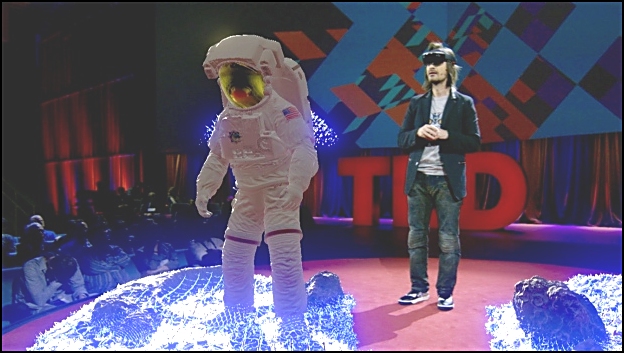 Making use of Augmented Reality glasses which show a space man. The space man is projected in the auditorium for the purposes of a TED talk. Photograph courtesy of TED (Feb 18, 2016). |
|
NASA Now Believes That
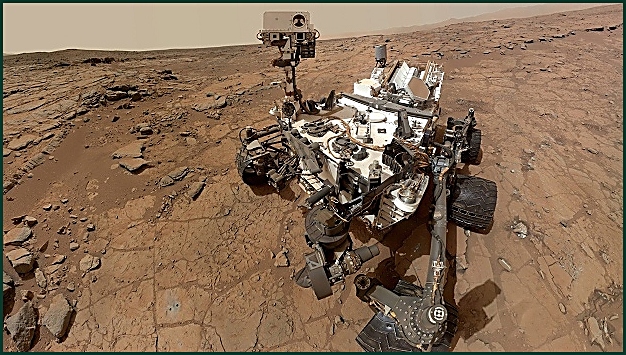
Photographs have shown darkish gully streaks which appear to flow downhill. Originally they thought it could be flowing water, but new reasearch suggests they are granular flows, grains of sand and dust sliding downhill. Mars today is very dry. Here are 24 Photographs of Mars taken by NASA during the last 2000 days. |
Flying Cars Everywhere:
(we are talking about earth now)
We now trust a car to park by itself and cars can drive themselves,
so within a decade, many will trust their new car to fly, and to
automatically take them to their selected destination.In the past, they did build flying vehicles but the driver needed to
be highly skilled and have a pilot's licence, so it never took off.
Soon, for those who prefer the scenic route, technology will
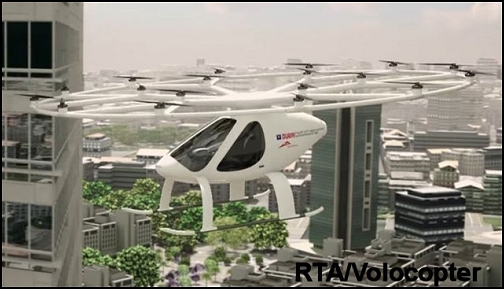
do the flying and landing for them.[ Sept. 2017 update ] - Dubai is racing to be the first to put drone taxis in the air.
So they expect to test the pilotless sky taxi later in 2017. The demand
for this around the world is now high due to traffic congestion.
The RTA Volocopter.
Using Nanobots to produce
factories of the future:
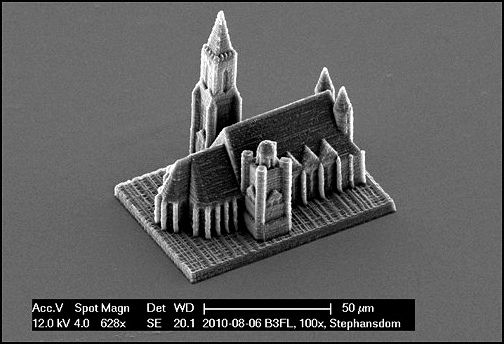
To the right is a nano church which is 1/1000 the width of a human hair. The printing of this church used a laser beam that was focused by mirrors onto a liquid resin which was hardened into this three-dimensional model.It will soon become practical and affordable to print intricate nano-scale structures for use in microscopic machinery and medical applications. For medical purposes 3D scaffolds will give cells a structure to stick to, so custom-made living tissues can be constructed from cells. Researchers at the Vienna University of Technology (TU Vienna) in an article by Tom Espiner, ZDNet UK, 13 March, 2012 17:21
In 2013, it is reported that they are working on the 3D printing of human organs. NBC News.com (2/20/13) The Bionic Eye: electrodes are implanted next to the retina. Then, the brain gradually learns to interpret the electrodes, so a blind person can gradually gain some sight. [RT television (www.rt.com) ].
A Nano Church (It is 1/1000 the width of a human hair.).
Photograph by Vienna University of Technology.
"Finally, Superman Vision."
|
See through objects: |
|
|
3D Printing
3D printing can print a wide variety of things:
|
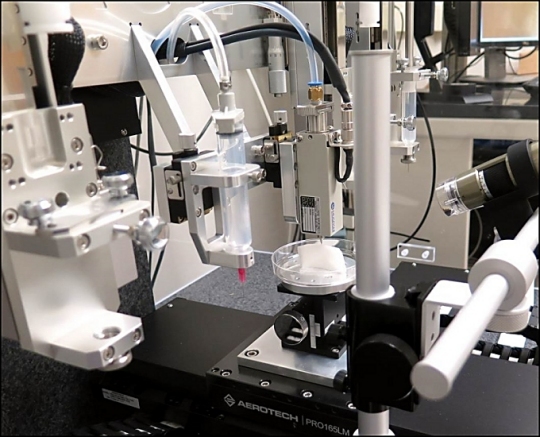 3D printer for printing human body parts. Photograph: Wake Forest Institute for Regenerative Medicine (Feb 16, 2016).
|
The Robotic Surgical Photocopy Machine: |
|
|---|---|
|
By 2020 they will cut down on both healthcare costs and human errors by creating robotic surgeons. The robotic surgeon will work on demand, using perfect information, do a perfect job, and have a perfect record. Operations will cost far less because they will no longer need tests, labs, or an actual surgeon. Plus, operations will be faster because the robotic surgeon will work with eight hands instead of two. It will be quick; it will be amazing. Using a computer chip instead of x-rays, ultrasound, etc.:
First they will implant a computer microchip into every major part of everybody's body. The chips will contain all the details needed to care for that part of the body: details that will be continually updated by the body. (All cells have a natural tendency to want to live so they will be easily trained to adopt an update-the-chip mentality.) No tests will be required. The chip will always contain perfect information which ensures a perfect operation. Once the microchips are implanted you will be good-to-go. How the operation works: |
First, scan the appropriate computer chip. There is nothing complicated about this, you will scan it in the same way you scan groceries at the grocery store. If you selected the wrong chip, not a problem. Just plug more money into the machine, and no doubt you will have better luck with your second operation. After the scan, the robot does everything automatically. When you get it right, the success rate will be 100%. Buying an operation from a multi-purpose photocopier: So after your photocopying is complete, select liver transplant, plug in your money (make sure you pay for it all, so it doesn't stop when it's half done), scan the right chip, jump up onto the photocopy machine, and lay flat exactly 1/4" from the edge. Don't wiggle ! Don't text ! Stop talking ! There is absolutely no chance of human error, so you won't be shaking, you will be completely relaxed. The multi-purpose photocopier will command the eight arms of the surgeon to cut, yank, and paste. That's all there is to it. It'll be quick. You'll be amazed. It will be done to perfection. The beauty of it all is the robotic surgeon will be built without ears, so it won't get distracted or make errors when you scream in pain or cry out for help. |
|
Genetic Engineering (taken to the extreme): |
Also, genetic engineering will allow us to mix plants and animals. So, should we allow a female researcher to cross a man with a tree? She would then have something much more stable and dependable, and he wouldn't run around as much. But who would want to be a tree?
|
Use Facebook to enrich your life. (Turn it into a tool for the future.)
( Make it conform to your unique interests and preferences.)
|
(1) Finding the benefits of Facebook (A major asset is its diversity. You can work with young, old, rich, poor, educated, or not, Etc.):
(2) Facebook criticism and response:
(The media criticizes Facebook, partly because it is a major competitor.)
(3) Use all of Facebook's potential:
|
A Variety of Posters Can Be Shared on Facebook: |
|
|---|---|
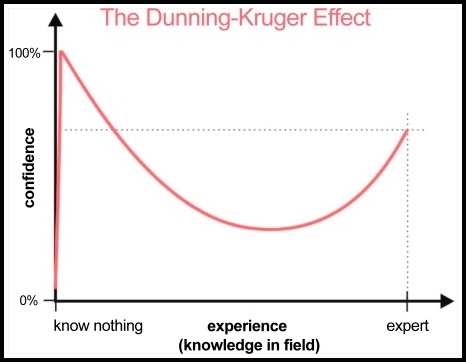 The Incompetent Tend to Think They Are Competent.
|
|
Some Posters Give Good Advice: |
||
|---|---|---|
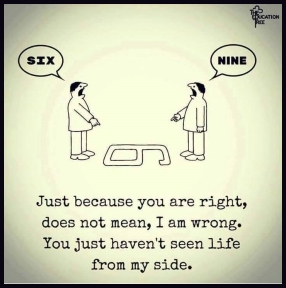 Sometimes a joke can provide valuable advice. This is a pleasant reminder to look at the other person's point of view.Image from my 2017 Facebook timeline. |
 When the left and right become divided politically, we can use this reminder that it is better for everyone to work together. |
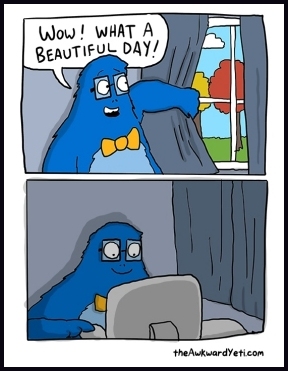 This joke can remind us to look after ourselves, to monitor our decisions. |
Some Posters Provide Bad Advice: |
||
|---|---|---|
|
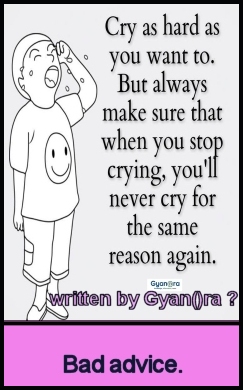
So, who created this? Sometimes the writer of a poster is a dreamer, not an expert or specialist. These posters need to be reported to Facebook. What is a person supposed to do when their mother dies? Are they not allowed to cry more than once? |
 This has horrible advice. The person giving the advice claims he/she was whipped "like there was no tomorrow." That would probably create concusions, and emotional damage. There would be buried hate and fear (although it could be numbed out, so the person might think they are okay). They are not in a positon to give advice. Some people would see these posters as professional and approved by thousands. So they would feel confident as they pounded the hell out of their children. There is a lot of research in this area which shows that severe discipline often causes serious psychological damage and learning problems. With the help of a Disney character, a lot of people were tricked into liking and sharing these posters. Image from my 2016 Facebook timeline.
|
 This is disturbing advice. Most people don't realize how important it is to be flexible. Countries are diverse, so people can't expect to get exactly what they want from their government. In a democracy, there needs to be flexibility while both the left and the right get consideration. Image from my 2016 Facebook timeline. |
Some Posters Twist Reality: |
||
|---|---|---|
|
So liberals are wildly irresponsible?
 This exaggerates to the extreme. Only an angry person would believe that liberals want "no vetting process whatsoever." Unfortunately, there are a lot of angry people. |
So hate the poor?
 Also exaggerating to the extreme. How many people are on welfare? This creates unnecessary and unfair beliefs about the nature of our society. The result, a tendency to believe that welfare people are a huge problem. So welfare payments are cut for welfare recipients who find life to be a huge struggle. Image from my 2017 Facebook timeline. |
So get rid of government?
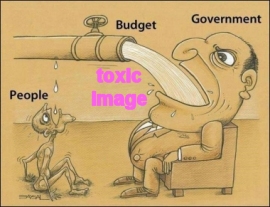 A wildly distorted depiction of our system. This is disturbing image can make people angry over a problem that doesn't exist. The government does not take all the money and leave the people with only drips. The government spends a lot of money on schools, police, healthcare, roads, military, etc. and obviously, the people benefit from all that. Since this is just a joke, people let down their guard. So they tend to absorb this warped view of reality. The image manipulates to get people to believe we need to get rid of all government. |
|
Future Problems
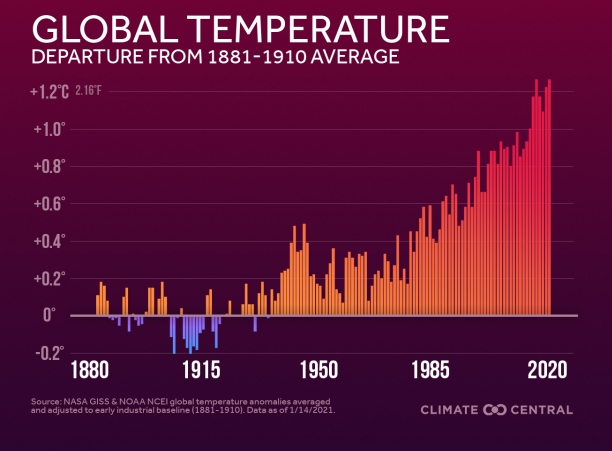
Global warming will have a HUGE impact on our future:
|
The Dec. 2015 Paris conference got agreement from 195 countries. Also, four studies show that 97% of Climate Scientists believe that man made global warming is a serious issue that we have to address. These are important key facts that carry a lot of weight. There are still many people who do not believe in global warming. The answers on the Internet are hidden in a hodgepodge of poorly done and confusing web sites. There are many myths, so this website can be a handy reference: Skeptical Science. You can also refer to the video called Denial 101 which summarizes how it was determined that 97% of Climate Scientists are in agreement. Scientists are a diverse group, so it isn't surprising that there are 3% who do not agree. This gives the 97% figure credibility. Also, here are two websites from The United States: Environmental Protection Agency and The United States National Aeronautics and Space Administration (NASA). |
It is important to know that the 20 warmest years on record Also, extreme weather continues to have devastating repercussions. |
|
An Epidemic of Obesity:
It isn't fair to blame 2 out of 3 people for having a lack of will power. Research shows that long-term weight loss is almost impossible (only 5% succeed). We hear when people lose weight, but that is only temporary. They don't say anything when they eventually gain it back. Also, this link discusses the global epidemic, the trends towards obesity. |
It is true that people need more exercise, but that is a smaller part of the problem. People need to be given a choice, and to be told why they are getting that choice. Convenient foods which are NOT addicting need to be made available. I recommend the 2013 book by Michael Moss (a Pulitzer Prize winner) called Salt Sugar Fat. The food industry uses a variety of strategies to get us to buy food that makes us fat. They know that competition is stiff, so it is hard to increase market share by 3%. It is much more effective if they increase profits by 100% on a customer by making them fat, so this has to be part of their strategy. (My assumption here is that if their customer becomes overweight, they will tend to spend twice as much on food compared to someone who is slim.) Being overweight has had a staggering impact on our lifestyle; and it effects our health. How can any nation claim to be strong when it is full of round and wobbly people? |
|
From Couch Potatoes to Blobs: |
|
After television became popular we soon had the couch potato. Since then, things have become worse due to irresistible packaged food, fast food, and junk food. Our preferred activity has become sitting: sitting in front of the computer, our smart phone, or the TV. Even children prefer to sit rather than to play. So obesity and its complications have become a major problem, and some of us will become not much more than a blob. There is currently a battle going on which will determine the future shape of the human race. |
The food industry (that wants people to be fat) is up against the fashion industry (that wants people to be skinny) and the porn industry (that wants people to be lumpy). At this time, it is easy to see that the food industry is going to be the clear winner. If you sense that for you it could get worse, you might have a hard battle to change your lifestyle, to change your eating and shopping habits. Avoid reaching the point where you need to go to the hospital, and the only way to get there is to use a forklift to hoist you and your bed onto a flatbed truck. [this happened in Kansas in Oct. '09] Obviously, there are better ways to enjoy life. |
Many people fail to realize that the human body not only needs food, but it needs movement. More and more scientific studies are proving that regular movement (EG. exercise (which can be free and enjoyable) ) can be as beneficial as some drugs (which can be expensive, with negative side effects and a negative long term impact). If you are one of the many who avoid exercise, why not turn on some music and have some fun? It can be painless. If you don't like exercise, try a stretching program. So, choose the kind of movement you enjoy, then use a program (or an activity computer game) that helps you become fit. |
The basic nature of our society.
We must realize that many corporations put profits before people.
Profits are important because they maintain efficiency, motivation, and focus.
But people are important too!
It is easy to find repulsive behavior to complain about. The food industry and the
pharmaceutical industry are not much better than the tobacco industry. Corporations have
increasing in size by 8 fold in the past 50 years and so have gained a lot of power.
So we need increased public awareness and more support for consumer action groups, in order
to balance things out. Consumer action groups can ensure there are proper regulations in place.
The average person needs to be given a chance to work and achieve their goals.
They need a chance to become perky people, fit as a fiddle,
tickled pink to be living a hunky dory life.
However, we also need realistic expectations,
because our world is complex and challenging !
Some changes that we feel are right can wind up making things worse.
|
Free play prepares children for life. |
|
Parents need to learn that if their child plays at their computer, that is not the same as free play. The computer limits the behavior of children and damages their development. Excessive screen time for a child is far more damaging for them than it is for an adult. |
Many parents will model the wrong behavior. When they see their child is also on the computer, they will tend to ignore the fact that free play works to prepare children for life. Free play allows for proper physical, mental, and emotional development. It helps children learn to cope with life, to concentrate, to relate with people, to do a job interview, and to cope with a job. It is important in helping people develop relationships and a healthy family life. Too much computer play is only helpful if a child plans to grow up to marry a computer. When we spend so much time engaged with our cell phones, it is easy to imagine how engaging a robot will become. In fact, rather than just a computer, in the future people will expect a life sized robot to interact with. That will be far better than a phone. |
Children who are attached to their computer will have a unique orientation. When they grow up and come out of the closet, they will proudly announce their preference: a robot. Robots are the best choice for marriage. They will keep your life simple, will be totally agreeable, and can be your best companion ever. A robot will be programmed to do everything you want, to treat you like a King, or a Queen. It will buy you a present for a special day. In fact, it will buy a present for whenever you want one, an expensive present, better than your wildest dreams. [But there is a catch. Before you buy this robot you must deposit $50,000 into it's account, and co-sign for future loans. Then every time you get a present, the CEO from the robot's manufacturer gets paid $100, the previous CEO gets $50, and the CEO who built it gets $200.] The robot will be flawless at showing deep appreciation. It's endless, unconditional love will be beyond your wildest dreams. |
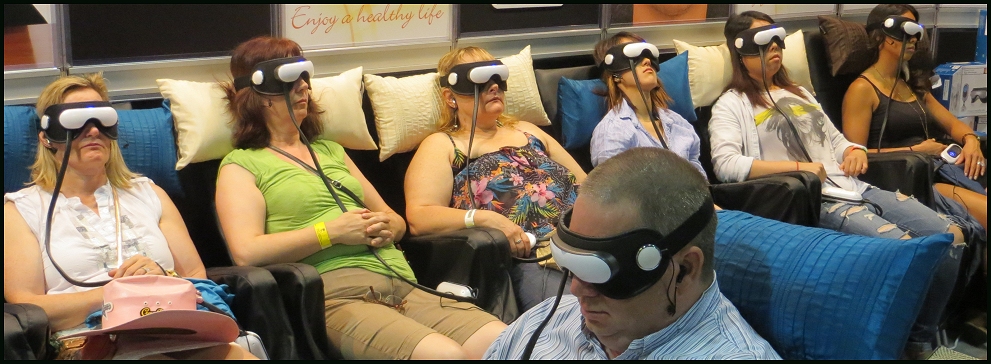
When virtual reality becomes more fun than real life, some people will stop working at trying to cope with life.
We need to be deliberate, and control how much we allow technology
to dominate our lives. {a 2015 photograph representing life in 2025}
|
Is Facebook A Problem? |
|
In North America in 2015, we have had Facebook people using posters that encourage parents to spank their children "like there is no tomorrow." [even though it is illegal] Another poster says that in order for parents to do their job properly they need to 'drive their children insane,' "hunt you down like a bloodhound ... stalk you ... be your worst nightmare." It claims that they do this out of love, because it is good parenting? So Facebook can be a brutal place where aggressive and angry people can dominate. They set a new standard of behavior, that feels right to them. But when they like and share these posters, they are promoting the spanking of children like there is no tomorrow. Some people who read the poster will then really feel free to pound the hell out of their children. Their children will struggle for the rest of their lives. One study shows that 95% of Juvenile delinquents had received physical punishment that was severe or extreme. If you lack concern about the creation of Juvenile delinquents, then start thinking about how much it costs the tax payer. The judicial system, policing and jails cost a lot of money. Facebook is in a position to help people and society become less barbaric and more civilized. At the start, the Internet had a lot of gambling, porn, and wild, free speech. But, in 2017, Facebook responded, and members responded, so it is becoming a friendly place. Members can work to make Facebook a family friendly environment which can influence everyone's life in a positive way. But the September 7, 2019 poster on the right and below is a reminder that maintaining a healthy environment is a daily challenge.
|
These two almost identical posters promote child abuse.
They were popular in 2015. Many people on my news feed liked and shared. 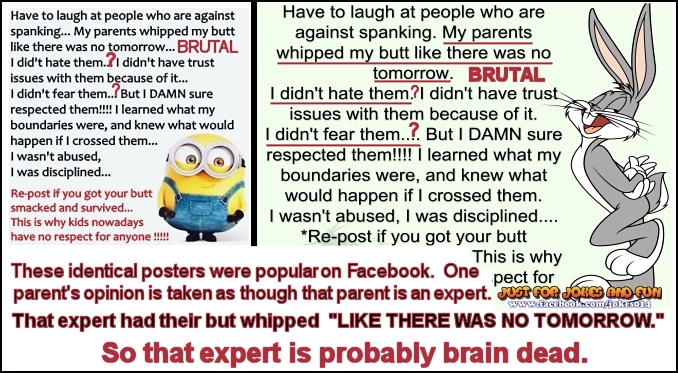
{Also note poster #3 below.} The poster on the right looks like Bugs Bunny.
|
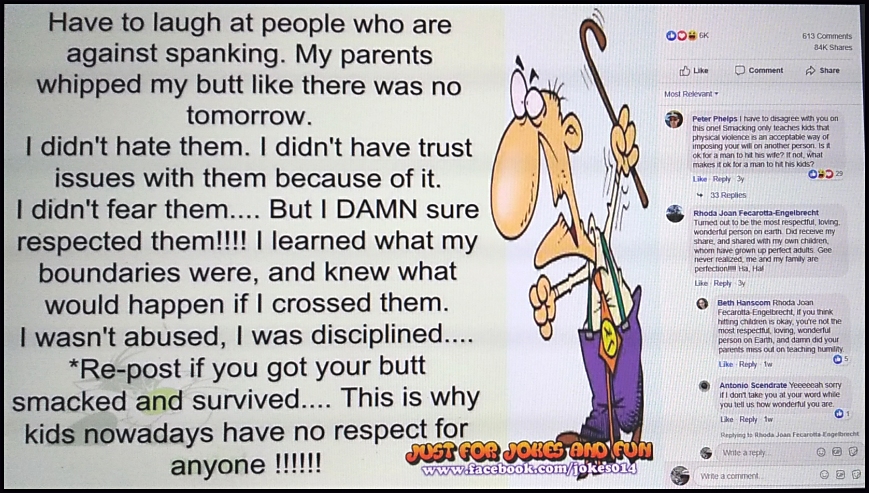
This is the third poster that promotes child abuse. It claims that
children should have their butt whipped "like there was no tomorrow."
Although this meme is three years old, comments were made last week,
and that is when my facebook friend shared it. A lot of damage has been done.
[Note that it got 6,000 likes, 84,000 shares, and 613 comments.]
|
Bringing Sanity to the World: |
|
By 2025, it will be widely accepted that quality pre-schools, daycares, and kindergartens have an extremely important role to play in the future of our world. We need to recognize that some parents are psychotic, some have been damaged by drugs, some were damaged by war, and some are simply totally incompetent. Some parents were raised with abuse, so the parenting that comes natural to them is abusive. (I continue to be amazed at how self centered some people are. They assume that everyone is the same as themselves. They fail to realize that some people have major weaknesses which are problematic to society as a whole.) |
So childcare workers will be given the added role (after a little additional training) of monitoring and influencing parents, to prevent abuse and neglect. They are in the best position to ensure that children in ALL families are emotionally healthy, so they don't grow up to become another Hitler, a fanatical leader, a mass murderer, an abuser, a bully, an addict, a criminal, or a mental patient. We need to keep in mind that changing the bad behavior of a child is far easier and far less costly than attempting to change the behavior of a damaged adult. Damaged adults cause problems wherever they go, require increased policing, jails, judicial system use, mental hospitals, treatment programs, etc. All of this costs "Big Bucks" and gets limited results. [Just one year in jail costs over $100,000 per inmate.] |
Choosing Our Future Life
|
People can now choose information from a wide variety of sources. So we have the power to choose what we feed our minds; so we can build our own reality. We can choose to live a healthier life, to enjoy life more; or we can choose things that cause damage. We need to also choose to work at gaining adequate understandings from our current diverse information sources. If we don't work at it, we can easily become unhinged from facts and reality. So as today's world quickly changes, we need to make reasonable choices about what kind of life we want to live. Keep in mind that if we don't decide, it will be decided for us. We will find ourselves doing things we don't really enjoy, things that harm our health, things that shorten our lives, or things with unexpected future consequences. |
|
In your journey through life, how do you What kind of road do you want |
Better Ways To Enjoy the Future
Examples of Fun Activities
|
Taking a journey
|
A variety of folk dances. |
Ice skating. |
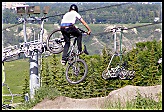 This guy tries to hang his bike on the lift cable. |
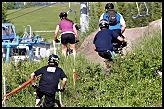
Bikers follow a path |
 . . These rafts are engaged in war. |
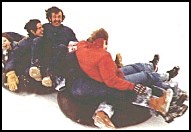 A group riding an inner tube. |
Running into each other. |
To comments and photos of these activities (includes links to videos). How do you think
they compare to taking drugs, or the excessive use of video games and television?
Notes: There are a lot of experts who know far more than
myself, so ideally they should be the ones running this website.
Complex problems have complex solutions. However, in our
complex and busy world, my impression is that a file like this
has practical value. When I chose to begin this project, it was
because it needed to be done, and I had the time; it was not
because I'm packed with knowledge, insight, and education.
I hope you are able to take what is here, work with it,
and turn it into something constructive.

A view of the Internet:
Click on the map above, and as you
stand on the WORLD STAGE, you will have
an amazing view of the audience, of the
locations of the people who have
recently visited this Web site.
to: 
Since Jan. 10, 2001 unique hits are: